Educational Activities of the Department of Railway Transport

Speciality J7 "Railway Transport"

Admission to the J7 "Railway Transport" speciality is based on the completion of a full secondary education.

Bachelor’s Degree in Railway Transport

First Level of Higher Education

Educational and Professional Program (EPP): Functionality of Railway Transport

Program Objective

The program aims to train specialists capable of solving complex, specialised tasks and practical problems in the fields of design, operation, maintenance, modernisation, and disposal of railway transport facilities. This involves applying relevant theories and methods while addressing the challenges posed by the complexity and uncertainty of railway transport operations.

Educational Program Goals

  • Establish a comprehensive training system for bachelor's degree students to ensure the preparation of highly qualified professionals in the railway transport sector.
  • Develop skills for solving complex engineering challenges in the design, operation, maintenance, modernisation, and disposal of railway transport facilities.
  • Prepare students for further education at the master’s level or professional careers in their chosen field.
  • Create conditions for personal growth and self-realisation.
  • Foster a modern, cognitive, creative, and socially active engineering and civic elite.

Core Focus of Specialisation

The program provides students with in-depth knowledge of the life cycle of railway transport facilities and prepares them for the comprehensive resolution of complex technical tasks within this field.


Structure of the Educational and Professional Program

The EPP includes two professional tracks (specialisations).

Track 1: Railway Rolling Stock

Key Features of This Specialisation:

  • Advanced theoretical knowledge and practical skills to support the operation, maintenance, modernisation, and disposal of railway rolling stock.
  • Ability to develop technological processes for railway rolling stock maintenance facilities, identify inefficiencies in maintenance and repair processes, and propose optimisation strategies.

Track 2: Railway Infrastructure

Key Features of This Specialisation:

  • Advanced theoretical knowledge and practical skills to support the operation, maintenance, modernisation, and disposal of railway infrastructure.
  • Ability to analyse and apply modern methods, tools, and systems for solving practical infrastructure-related tasks and managing railway infrastructure.
  • Competence in forecasting and assessing the resource lifespan of railway infrastructure facilities, as well as enhancing the durability of infrastructure components using modern engineering methods.


Career Prospects

Graduates of this program will work in the railway transport sector.

Potential Employers

Organisations and enterprises involved in

  • Operation, maintenance, design, manufacturing, testing, and modernisation of railway rolling stock and infrastructure.
  • Development of technological processes and technical equipment for servicing, repairing, and recycling railway rolling stock and infrastructure.

Primary Job Positions

Graduates can pursue careers in the following positions:

  • Engineer in Automated Production Control Systems
  • Operations and Maintenance Engineer
  • Occupational Safety Engineer
  • Maintenance Engineer
  • Rail Transport Engineer
  • Track Supervisor
  • Mechanical Engineer
  • Technical Diagnostics Engineer
  • Rolling Stock and Infrastructure Maintenance Engineer


Academic Rights

Graduates have the opportunity to:

  • Continue their education at the master’s level.

Obtain additional qualifications through postgraduate education and professional certification programs.

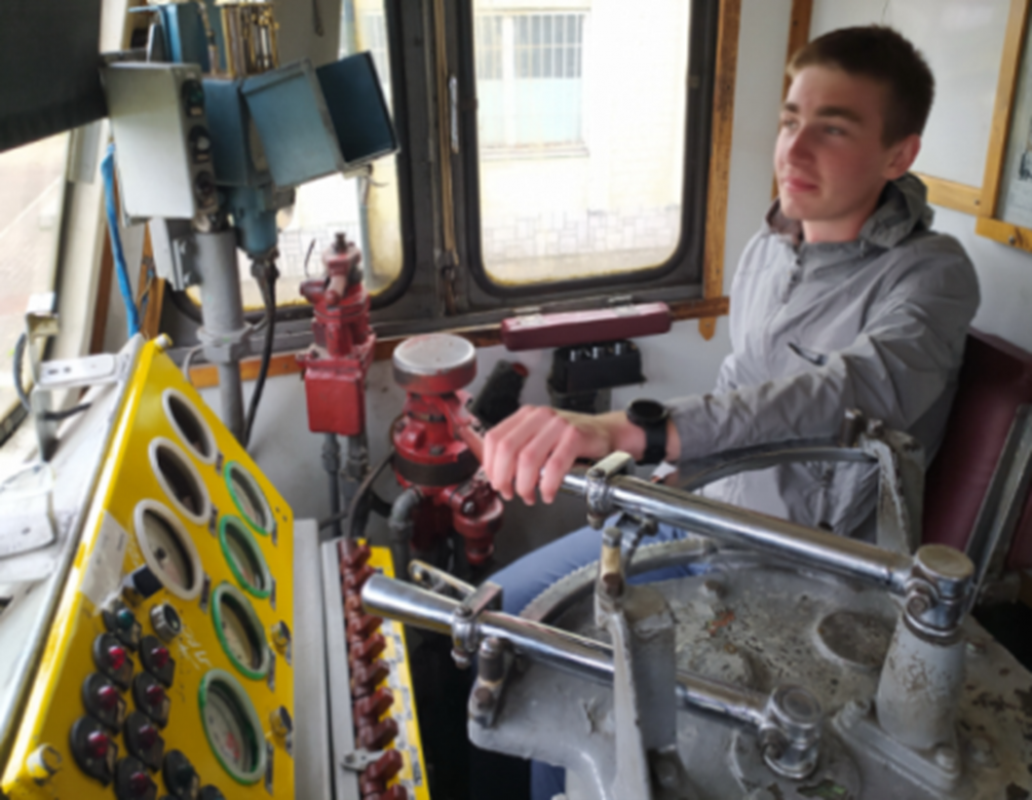


EPP: Functionality of Railway Transport The Department Team with Students

Admission to the J7 "Railway Transport" speciality is based on the completion of a full secondary education.

Speciality J7 "Railway Transport"

Admission to the J7 "Railway Transport" specialty is available for applicants who have completed full secondary education, as well as for holders of junior specialist or junior bachelor's diplomas. Enrollment is possible on both state-funded and commercial (self-financed) bases.

Bachelor’s Degree in Railway Transport

First Level of Higher Education

Educational and Professional Program (EPP): Locomotives and Locomotive Facilities and Operations

Program Objective

The program is designed to train highly qualified specialists in the design, enhancement of structures and maintenance systems, diagnostics, and repair of locomotives, as well as in locomotive fleet management.

Educational Program Goals

  • Train specialists capable of solving complex, specialised tasks and practical problems related to the design, operation, maintenance, modernisation, and disposal of locomotives.
  • Prepare students for further education at the master's level or professional employment in the railway sector.

Core Focus of Specialisation

The program emphasizes the organization of locomotive operation and maintenance, as well as quality control in locomotive manufacturing, repair facilities, and depots serving mainline and industrial railway transport.


Structure of the Educational and Professional Program

The EPP includes two professional tracks (specialisations).

Track 1: Locomotive Modernisation and Design

Key Features of This Specialisation:

  • Advanced theoretical and practical knowledge to define key locomotive parameters.
  • Ability to analyse locomotive design in terms of strength, reliability, and operational safety.
  • Identification of design-related challenges and proposals for improving locomotive components and structural elements.

Track 2: Locomotive Operation and Maintenance

Key Features of This Specialisation:

  • In-depth theoretical and practical training in ensuring the reliability and safety of locomotive fleets for both mainline and industrial railway transport.
  • Timely and high-quality maintenance and repair of locomotive systems.
  • Design of technological processes and technical equipment for locomotive servicing and repair.


Career Prospects

Graduates of this program will work in the railway transport sector.

Potential Employers

Organisations and enterprises involved in

  • Operation, maintenance, design, manufacturing, testing, and modernisation of locomotives.
  • Development of technological processes and technical equipment for locomotive servicing and repair.
  • Preparation of design and regulatory-technical documentation in the railway sector.

Primary Job Positions

Graduates can pursue careers in the following positions:

  • Mechanical Engineer
  • Rail Transport Engineer
  • Engineer in Automated Production Control Systems
  • Technical Diagnostics Engineer
  • Operations and Maintenance Engineer
  • Occupational Safety Engineer
  • Locomotive Maintenance Engineer
  • Locomotive Acceptance Engineer
  • Engineer for the Implementation of New Technologies
  • Engineer for Standardisation and Quality


Academic Rights

Graduates have the opportunity to:

  • Continue their education at the master’s level.
  • Obtain additional qualifications through postgraduate education and professional certification programs.
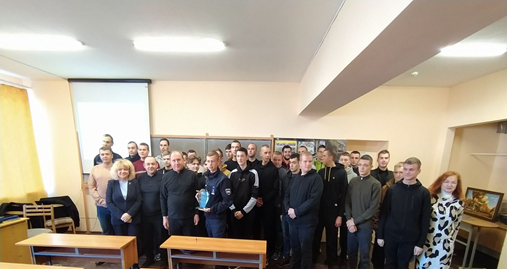
Defense of Bachelor's Qualification Theses in the Examination Committee "Locomotives and Locomotive Facilities" (Photo from 2023). EPP „Locomotives and Locomotive Facilities and Operations”


Educational and Professional Program (EPP): Railway Facilities and Track Infrastructure

Program Objective

The program aims to train highly qualified specialists in railway track infrastructure management, design, construction, diagnostics, maintenance, repair, and reconstruction of mainline and industrial railway transport facilities.

Educational Program Goals

  • Develop a comprehensive training system to prepare specialists capable of designing and implementing modern technologies for railway track operation and infrastructure management.
  • Foster self-development and self-realisation of students.
  • Nurture a modern engineering, intellectual, and civic elite.

Core Focus of Specialisation

This specialisation provides students with a deep understanding of the functioning of railway track infrastructure as a subsystem of railway networks. It also focuses on the management of railway track maintenance systems throughout their operational lifecycle.


Structure of the Educational and Professional Program

The EPP includes two professional tracks (specialisations).

Track 1: Railway Design and Construction

Key Features of This Specialisation:

  • Advanced theoretical and practical knowledge in railway design and construction, with a focus on structural strength, reliability, and operational safety.
  • Identification of engineering challenges and development of solutions for improving structural elements.

Track 2: Railway Operation and Track Maintenance

Key Features of This Specialisation:

  • In-depth theoretical and practical training in ensuring the reliable and safe operation of railway track infrastructure for mainline and industrial railway transport.
  • Timely and high-quality maintenance and repair of railway track systems and technical equipment.


Career Prospects

Graduates of this program will work in the railway transport sector.

Potential Employers

Organisations and enterprises involved in

  • Operation, maintenance, design, manufacturing, testing, and modernisation of railway tracks and infrastructure.
  • Development of railway infrastructure enterprises, technological processes, and technical equipment for track maintenance and repair.
  • Preparation of design and regulatory-technical documentation in the railway sector.

Primary Job Positions

Graduates can pursue careers in the following positions:

  • Engineer in Automated Production Control Systems
  • Civil Engineer
  • Objective Control Engineer
  • Operations and Maintenance Engineer
  • Occupational Safety Engineer
  • Track Maintenance and Repair Engineer
  • Rail Transport Engineer
  • Track Maintenance Supervisor
  • Track Inspector
  • Bridge and Structure Repair Technician
  • Railway Signaler


Academic Rights

Graduates have the opportunity to:

  • Continue their education at the master’s level.

Obtain additional qualifications through postgraduate education and professional certification programs.
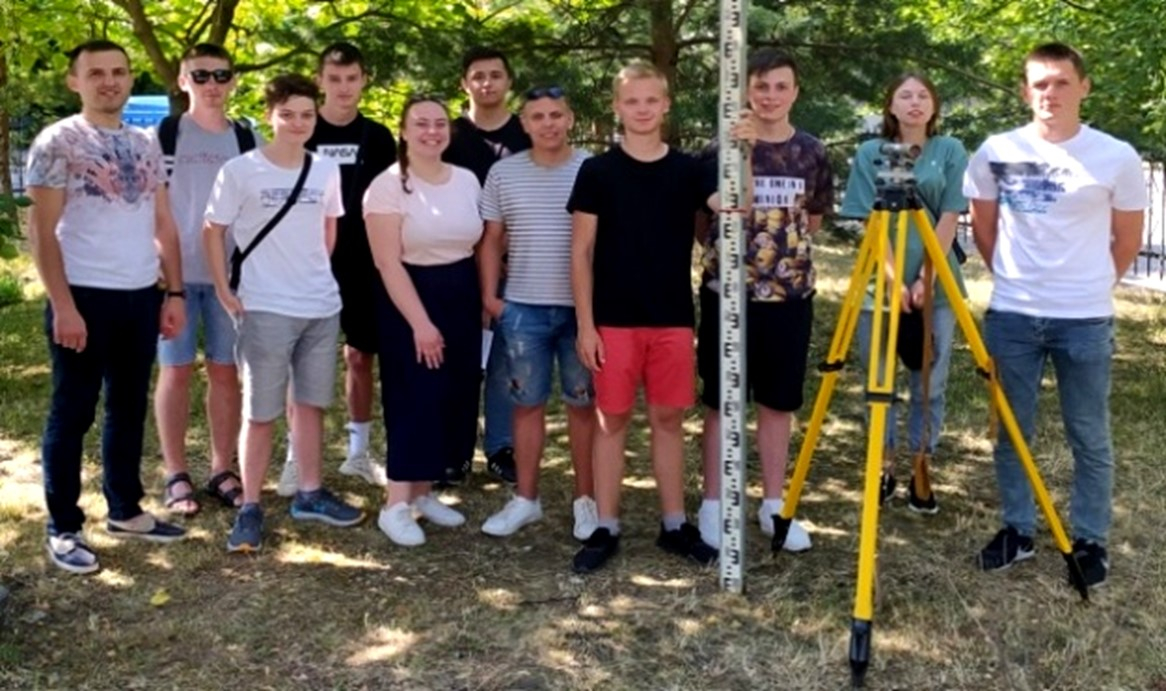
Defense of Bachelor's Qualification Theses in the Examination Committee "Railway Facilities and Track Infrastructure" (Photo from 2023). Railway Facilities and Track Infrastructure

Educational and Professional Program (EPP): Wagons and Wagon Facilities

Program Objective

The program aims to train highly qualified specialists in the design, manufacturing, maintenance, diagnostics, and repair of wagons, as well as wagon fleet management.

Educational Program Goals

  • Develop specialists capable of solving complex, specialised tasks and practical challenges related to the design, manufacturing, operation, maintenance, modernisation, and disposal of wagons and their components.
  • Prepare students for further education at the master’s level or for professional careers in the railway sector.

Core Focus of Specialisation

The program emphasises:

  • Organisation of wagon operation and maintenance.
  • Technical condition monitoring of wagons and their components.
  • Control over wagon maintenance parameters and processes.
  • Production planning and efficiency assessment in wagon repair and manufacturing enterprises.
  • Management of wagon depots within mainline railway transport (JSC "Ukrzaliznytsia"), as well as private and industrial railway enterprises.


Structure of the Educational and Professional Program

The EPP includes two professional tracks (specialisations).

Track 1: Wagon Design, Manufacturing, and Construction

Key Features of This Specialisation:

  • Advanced theoretical and practical knowledge in determining the key technical and economic parameters of wagons and containers.
  • Evaluation of wagon structures in terms of strength, reliability, and operational feasibility at all stages of design.
  • Selection of equipment for wagon manufacturing and repair, with process planning and organisation to ensure safe operation.
  • Identification of design and manufacturing challenges and the development of solutions for improving wagon structures.

Track 2: Wagon Operation, Modernisation, and Maintenance

Key Features of This Specialisation:

  • Advanced theoretical and practical skills in ensuring the reliable and safe operation of wagons and their components in mainline and industrial railway transport.
  • Forecasting, planning, and performing timely and high-quality repairs of wagons and their components.
  • Utilisation of automation and mechanisation systems in wagon maintenance and repair processes, followed by quality control.
  • Design and organisation of technological processes at wagon maintenance and repair enterprises, including the selection of necessary technical equipment.


Career Prospects

Graduates of this program will work in the railway transport sector.

Potential Employers

Organisations and enterprises involved in

  • Operation, maintenance, design, manufacturing, testing, and modernisation of wagons.
  • Development of technological processes and technical equipment for wagon servicing and repair.
  • Preparation of design and regulatory-technical documentation in the railway sector.

Primary Job Positions

Graduates can pursue careers in the following positions:

  • Train Electromechanic
  • Train Manager
  • Mechanical Engineer
  • Technical Designer
  • Production Dispatcher
  • Rail Transport Engineer
  • Engineer in Automated Production Control Systems
  • Technical Diagnostics Engineer
  • Operations and Maintenance Engineer
  • Occupational Safety Engineer
  • Wagon Repair Engineer
  • Wagon Acceptance Engineer
  • Engineer for the Implementation of New Technologies
  • Engineer for Standardization and Quality
  • Work Supervisor
  • Defectoscopist (Non-Destructive Testing Specialist)
  • Rolling Stock Repair Technician
  • Team Supervisor
  • Production Unit Supervisor


Academic Rights

Graduates have the opportunity to:

  • Continue their education at the master’s level.

Obtain additional qualifications through postgraduate education and professional certification programs.
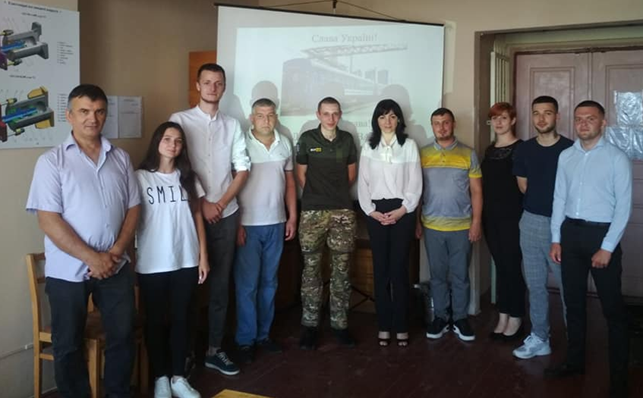
Defense of Bachelor's Qualification Theses in the Examination Committee "Wagons and Wagon Facilities" (Photo from 2023). EPP “Wagons and Wagon Facilities”

Master’s Degree in Railway Transport

Second Level of Higher Education

Educational and Professional Program (EPP): Functional Safety of Railway Transport

Rationale for the Program

This program addresses the need for highly qualified specialists in the railway industry, capable of effectively operating within the framework of European integration and implementing new railway safety standards in their organisations.

Relevance

The program is particularly relevant due to the active implementation of European railway management practices in Ukraine. Functional safety is a key component of this transformation, yet there is a significant demand for specialists in this field within JSC "Ukrzaliznytsia" and the broader railway sector.

This educational program is intended for graduates of the bachelor’s level (speciality J7 "Railway Transport") and for railway industry professionals seeking advanced expertise.

The curriculum aligns with all requirements of the higher education standard for speciality J7 "Railway Transport" at the second (master's) level.

Definition of Functional Safety in Railway Transport

Functional safety in railway transport refers to a comprehensive system of measures that ensures safety risks arising from system malfunctions are reduced to an acceptable level.


Program Objectives and Learning Outcomes

Program Objective

To train highly qualified specialists capable of:

  • Solving complex specialised tasks related to the design, operation, maintenance, modernisation, and disposal of railway transport facilities.
  • Implementing railway safety management systems within railway enterprises.
  • Engineering crisis and risk management in transport services.
  • Modelling the lifecycle of railway transport facilities, considering technical and operational interoperability with European railway systems through the application of modern industry technologies.

Program Goals

  • Provide theoretical knowledge and practical skills necessary for professional excellence in specialty J7 "Railway Transport" under the "Functional Safety of Railway Transport" program.
  • Prepare students for employment in their chosen field or for further studies at the third (doctoral) level of higher education.

Core Focus of Specialisation

The "Functional Safety of Railway Transport" program defines the framework and requirements for training railway safety management professionals. It includes:

  • Crisis and risk management in transport services.
  • Lifecycle modeling of railway transport facilities.
  • Ensuring technical and operational interoperability between Ukraine’s railway infrastructure and rolling stock with European railway systems, based on cutting-edge industry technologies.


Orientation and Unique Features of the Program

Program Orientation

This EPP is based on:

  • Established principles and modern scientific research.
  • European directives and regulations on design, operation, maintenance, and modernisation of railway transport facilities and infrastructure.

Unique Features of the Program

  • A focus on solving railway functional safety challenges.
  • Preparation for the integration of Ukraine’s railway system into the European transport network.


Structure of the Educational and Professional Program

The EPP includes two professional tracks (specialisations).

Track 1: Railway Infrastructure

Key Features of This Specialisation:

  • Ability to assess the compliance of railway infrastructure components with set requirements to ensure interoperability.
  • Capability to organise railway enterprise operations based on functional safety assessments and make decisions regarding modifications and upgrades to railway infrastructure.
  • Proficiency in solving complex practical tasks related to infrastructure lifecycle processes, applying innovative technological solutions.

Track 2: Rolling Stock

Key Features of This Specialisation:

  • Ability to evaluate rolling stock design for operational interoperability and propose enhancements.
  • Capability to analyse rolling stock-track interactions, as well as component compatibility, in accordance with national and EU standards.
  • Proficiency in solving complex practical challenges related to rolling stock lifecycle processes, utilising innovative technologies, and ensuring functional safety in railway transport.


Career Prospects

Graduates of this program will work in the railway transport sector.

Primary Job Positions

Graduates can pursue careers in:

  • Management and executive positions in railway enterprises.
  • Engineering roles related to railway operations, maintenance, and modernisation.
  • Implementation of advanced railway technologies.
  • Rolling stock and infrastructure design and engineering.
  • Scientific research and teaching in railway transport disciplines.


Academic Rights

Graduates have the opportunity to:

  • Continue their education at the third (doctoral) level of higher education.
  • Obtain additional qualifications through adult education and professional development programs.
Masters in Railway Transport. Educational and Professional Program "Functional Safety of Railway Transport."
Оновлено 3 days 23 hours тому