On November 28, 2025, within the framework of the project “EU Global Responsible Leadership: Climate Change, Environmental Protection and Humanitarian Aid” (EU_LEAD), supported by the Erasmus+ Jean Monnet programme, a meeting of the “EU for YOU” Euroclub took place. International relations students of Lviv Polytechnic and other participants had the opportunity to speak with Valeriia Hutsaliuk — PhD, scholarship holder of Erasmus+, DAAD, the International Visegrad Fund (IVF), NAWA, the Central European University (CEU), and the European University Institute (EUI); Head of the Scientific Society of Students, Postgraduates, Doctoral Candidates and Young Scholars of the Institute of Humanities and Social Sciences; and Assistant Lecturer at the Department of Political Science and International Relations at Lviv Polytechnic National University. She delivered a talk titled: “Prospects for the EU’s Global Climate Leadership: Four Alternative Futures.” It is worth noting that Valeriia Hutsaliuk is the author of a dissertation on the specifics of applying normative power in EU climate policy (using Ukraine as a case study) (2024), as well as numerous academic publications, including in reputable international journals.
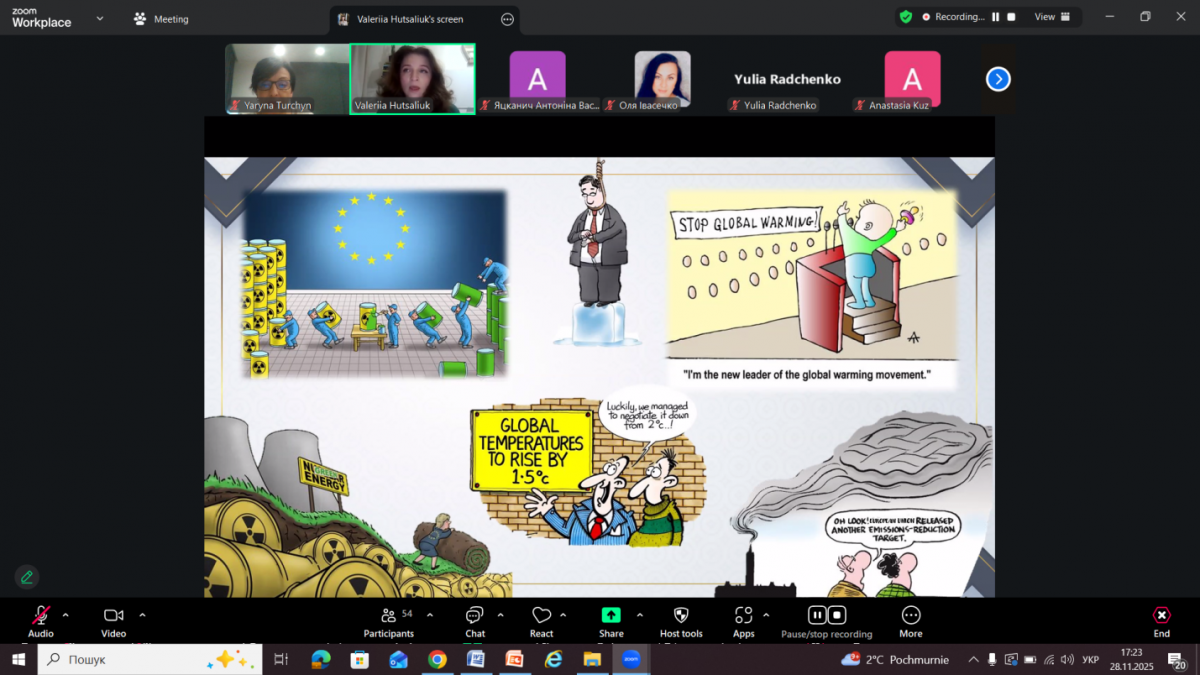
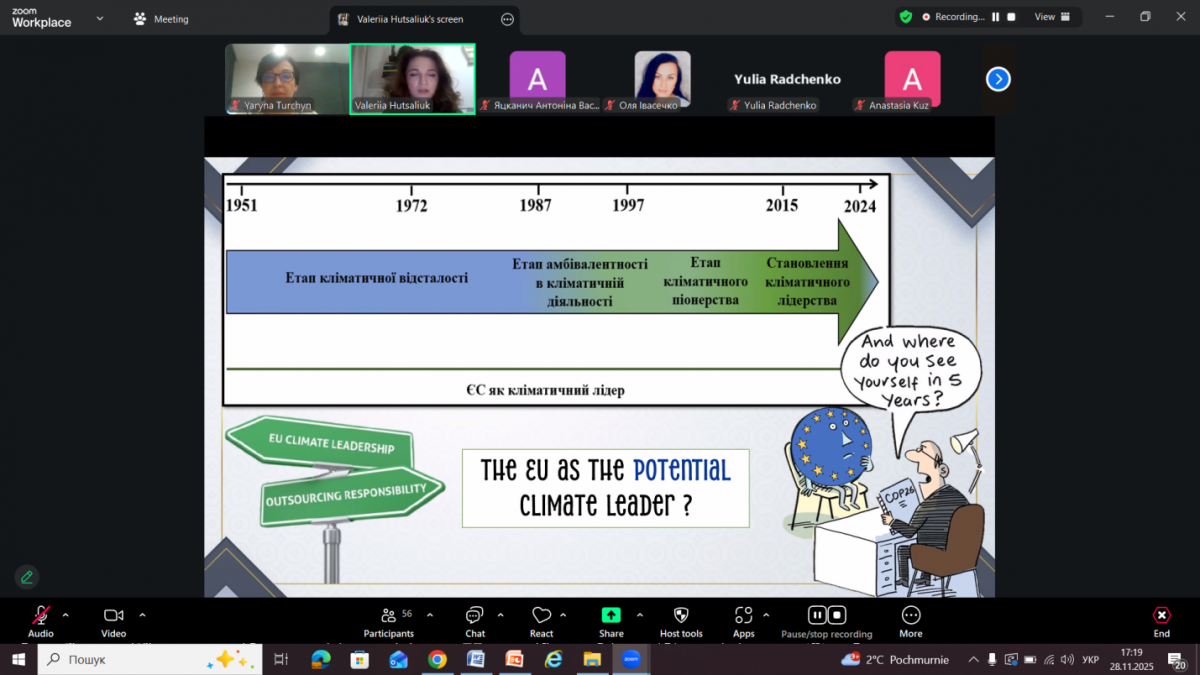
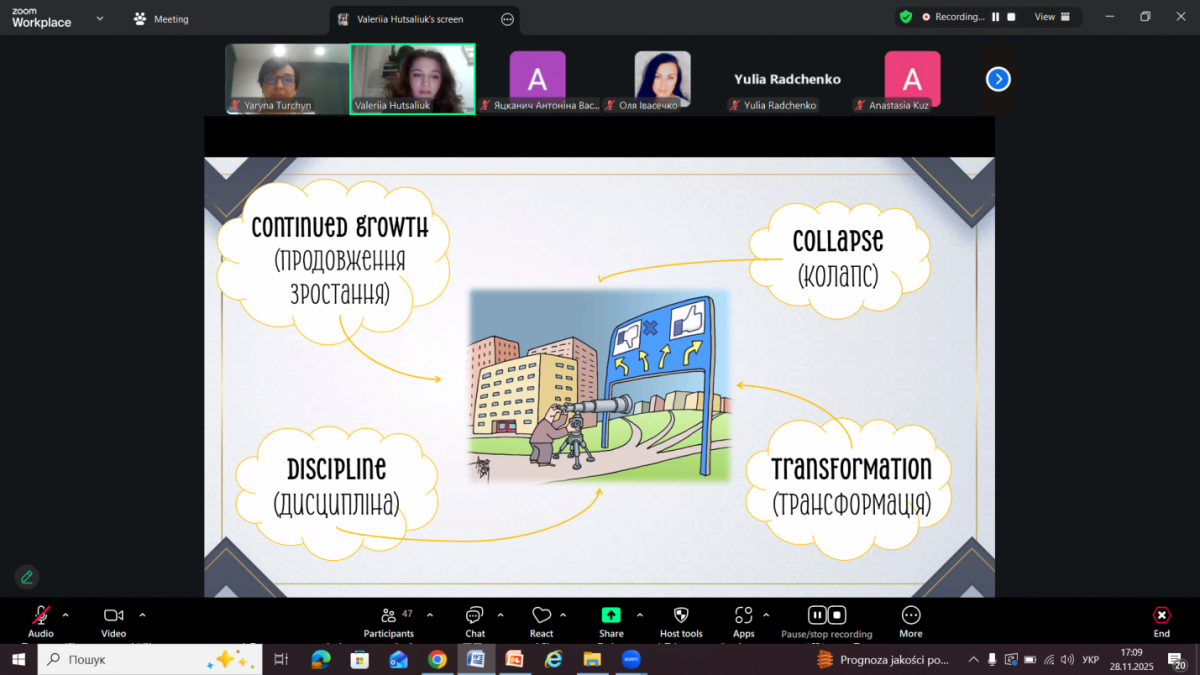
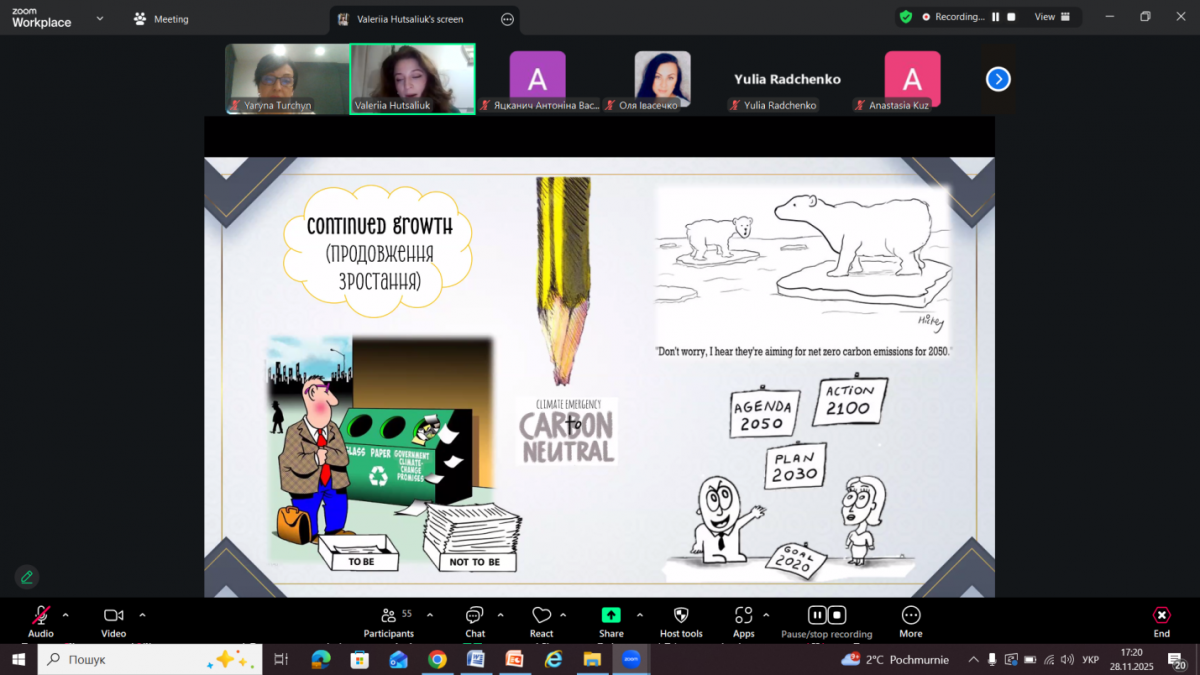
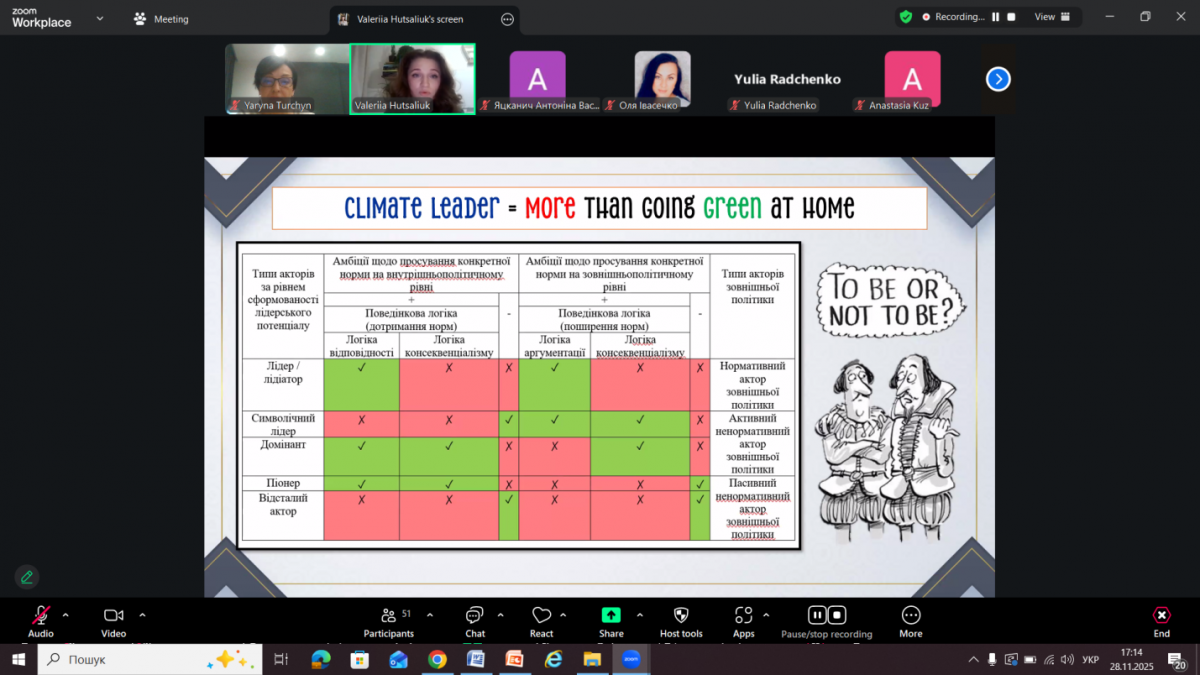
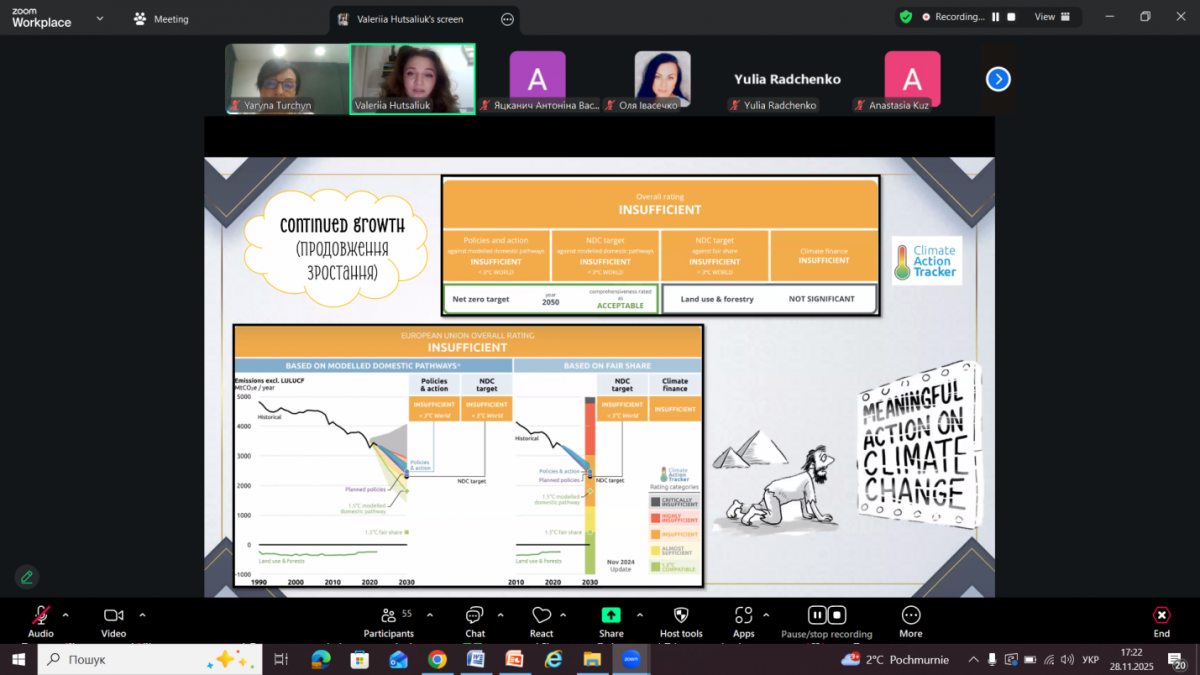
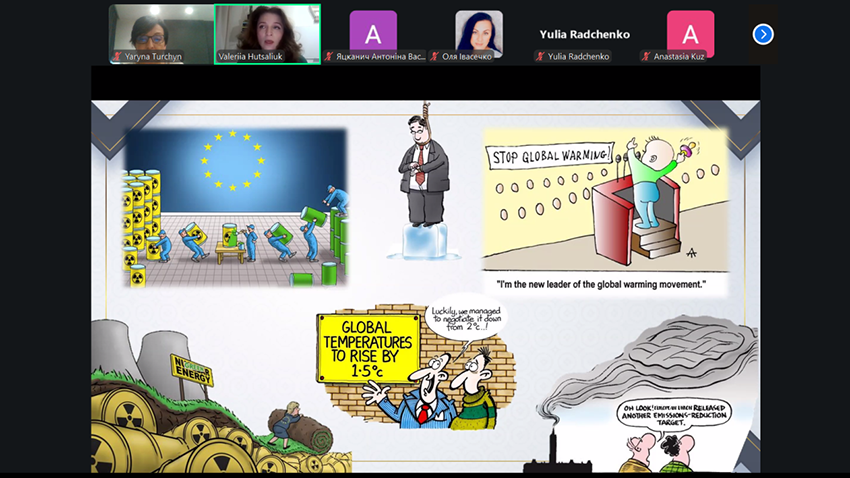
For clearer understanding of the topic, the speaker structured her presentation using the method of alternative futures developed by the renowned futurist Jim Dator. Thus, Valeriia Hutsaliuk outlined four fundamentally different scenarios of the EU’s global climate leadership: “Continuation of Growth,” “Collapse,” “Discipline,” and “Transformation.” Examining each scenario through the lens of the climate challenge, the researcher repeatedly referred to J. Dator’s claim that no future scenario is unequivocally “good” or “bad,” that there is no “best,” “worst,” or “most likely” scenario, and that in the long term all future scenarios are possible. She provided a detailed overview of the consequences of the climate crisis, such as climate migration, resource conflicts, food insecurity, new epidemics and diseases, political instability, changes in consumption patterns, and more. The seriousness of climate challenges was illustrated with various indices and infographics. The speaker also presented her own typology of climate leadership among modern states (“leader,” “symbolic leader,” “dominant,” “pioneer,” “laggard”), describing their characteristics and analysing them using the European Union as an example. Additionally, she discussed the potential of the EU’s climate leadership from 1951 to the present, including its strengths and limitations. At the end of the event, Valeriia Hutsaliuk noted that everyone can calculate their own carbon footprint independently and shared relevant information resources with the students.
The topic of the “EU for YOU” Euroclub sparked considerable interest among students, who actively joined the discussion. The young participants inquired about the impact of growing geopolitical competition (particularly from China and the United States) on the EU’s ability to attain global climate leadership, mechanisms for motivating non-EU countries to adhere to climate principles, Ukraine’s implementation of the European Green Deal during and after the war, and the feasibility of combining economic growth with achieving climate neutrality.
The EU_LEAD project team thanks everyone for the engaging discussion and invites participants to other interesting events within the project. In total, 55 people — lecturers, postgraduates, and students of Lviv Polytechnic — took part in the event.
The event was prepared in cooperation with the Scientific Society of Students, Postgraduates, Doctoral Candidates and Young Scholars of the Institute of Humanities and Social Sciences.
More detailed information about the project is available at the following link.